 |
| Happy Halloween! |
Tuesday, October 30, 2012

Alphabet Project

Monday, October 22, 2012
Macro Photos (Absent)
 |
| Chains |
 |
| Paper Decoration |
 |
| Headphone |
 |
| Green leaves |
 |
| More green leaves |
 |
| Orange Sunflower |
 |
| Penny in the parking lot |
 |
| Red Flower at cousin's wedding |
 |
| Red & Orange flower at cousin's wedding |
 |
| My birthstone ring |
While doing this project, I learned that you don't have to be really close to something to get a good picture, you can be far away and just zoom in and it looks the same. Unfortunately, I didn't start to notice this until towards the end of my project. I also learned that sometimes (at least my camera) would not take certain photos unless you had the right zoom, angle, or lighting. That got frustrating sometimes, but it also made sense why it wouldn't do that.
Sunday, October 21, 2012
Alfred Stieglitz
1. Who was Alfred Stieglitz and why is he
noteworthy in the history of photographyAlfred Stieglitz was an American photographer and modern art promoter. He is noteworthy in the history of photography because he made his photography a form of art/
2. Choose a photograph he made, upload it to your blog, and explain why you chose it as your favorite by him.

I chose this photograph he took because it's in New York and it really shows the true character New York had back then.
3. With what famous painter was he in a relationship? Who was she? Upload a painting by her that you like.
He was in a relationship with Georgia O'Keeffe and she was a famous painter who painted large-format paintings.

Extra: How did they influence each other in their art making?
Monday, October 8, 2012
Tilt Shift
 |
| I took this picture on my roof of my neighbors horse stable around 4:45pm |
 |
| I went to the Carrie Underwood concert on Sunday night at the Rose Quarter and took this of the crod and band. |
 |
| I took this picture of my pug when he went swimming in our pond around mid-day |
 |
| I took this picture of my boyfriend and my dog sleeping when I was upstairs on my bridge, |
 |
| This was a picture of when I got asked to homecoming and was taken in the early morning |
 |
| This is a picture of my flyer on my cheer team at Ibach park doing a scorp around 5 pm |
While doing this project, I learned that the pictures turn our best when you have people in them and when you take it not to high above, but not too low to the ground. If I get the chance to do these kinds of photos again, I would go to downtown portland and take pictures of people shopping at the Saturday Market or just walking along the waterfront or streets.
Sunday, October 7, 2012
The Brownie Camera
1. What is a Brownie Camera?
The Brownie Camera is a very popular, inexpensive camera that started out as a very basic cardboard box camera
2. Who invented it, and when?
Eastman Kodak invented it and it was introduced in February, 1900
3. How did it change society, and of course, the photography world?
The Brownie Camera changed society by allowing people to easily take pictures of anything and the camera was such a low cost. They started at only $1! It changed the photography world because it led to other types of camera and you were able to capture the modern world around you.

Monday, September 24, 2012
Daguerreotype
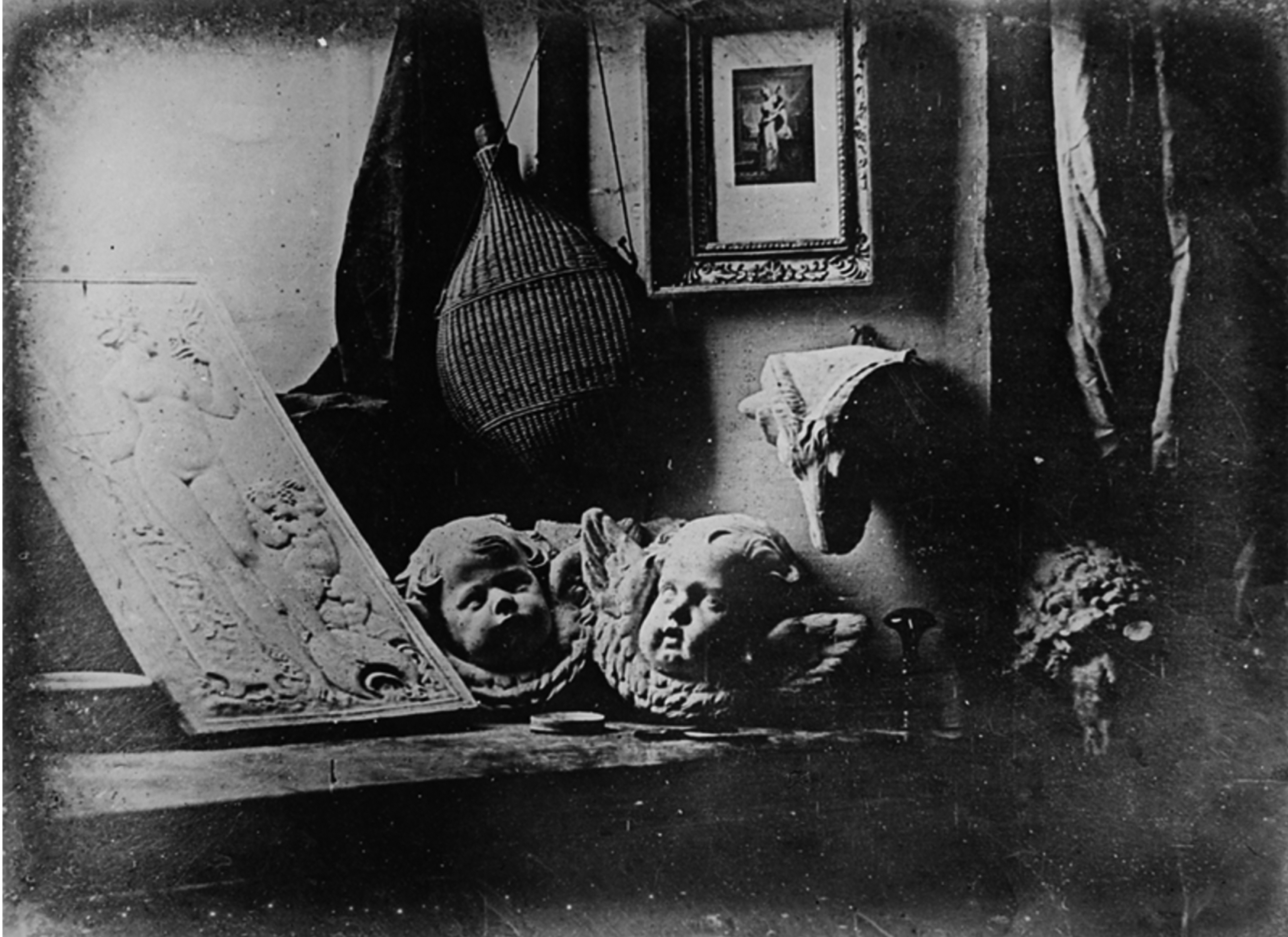 |
| An 1837 daguerreotype by Daguerre, claimed to be the first to complete the full process. |
2. An "albumen" print (also called albumen silver print) was the first commercially exploitable method of producing a photographic print on a paper base from a negative. The main ingredient of the albumen process were egg whites which would bind the photographic chemicals to the paper. The albumen method died out during the turn of the 20th century.
 |
| The Hypaethral Temple, Philae, by Francis Frith, 1857 |
3. Stereograph is a particular mapping that projects a sphere onto a plane. The projection is defined on the entire sphere except at the projection point. When used in photography stereographic projection captures a did angle view. They were popular when mapping panoramas over the other azimuthal projections.
 |
| Spherical panorama of Paris |
4. The carte de visite was a type of small photograph. It was patented in Paris, France by the photographer Andre Adolphe Eugene Disderi in 1854, but it was first used by Louis Dodero. It was used for photograph cards. The popularity of the cards spread "Cardomania" throughout Europe and quickly to America.
 |
| One of the first Carte de visit of Queen Victoria taken by photographer John Jabez Edwin Mayall |
 |
| Photographer Mathew Brady |
 |
| (Mathew Brady) Soldier guarding arsenal in Washington, D.C. |
 |
| (Mathew Brady) The day of Abraham Lincoln's Cooper Union Speech in 1860 |
 |
| Photographer Alexander Gardner |
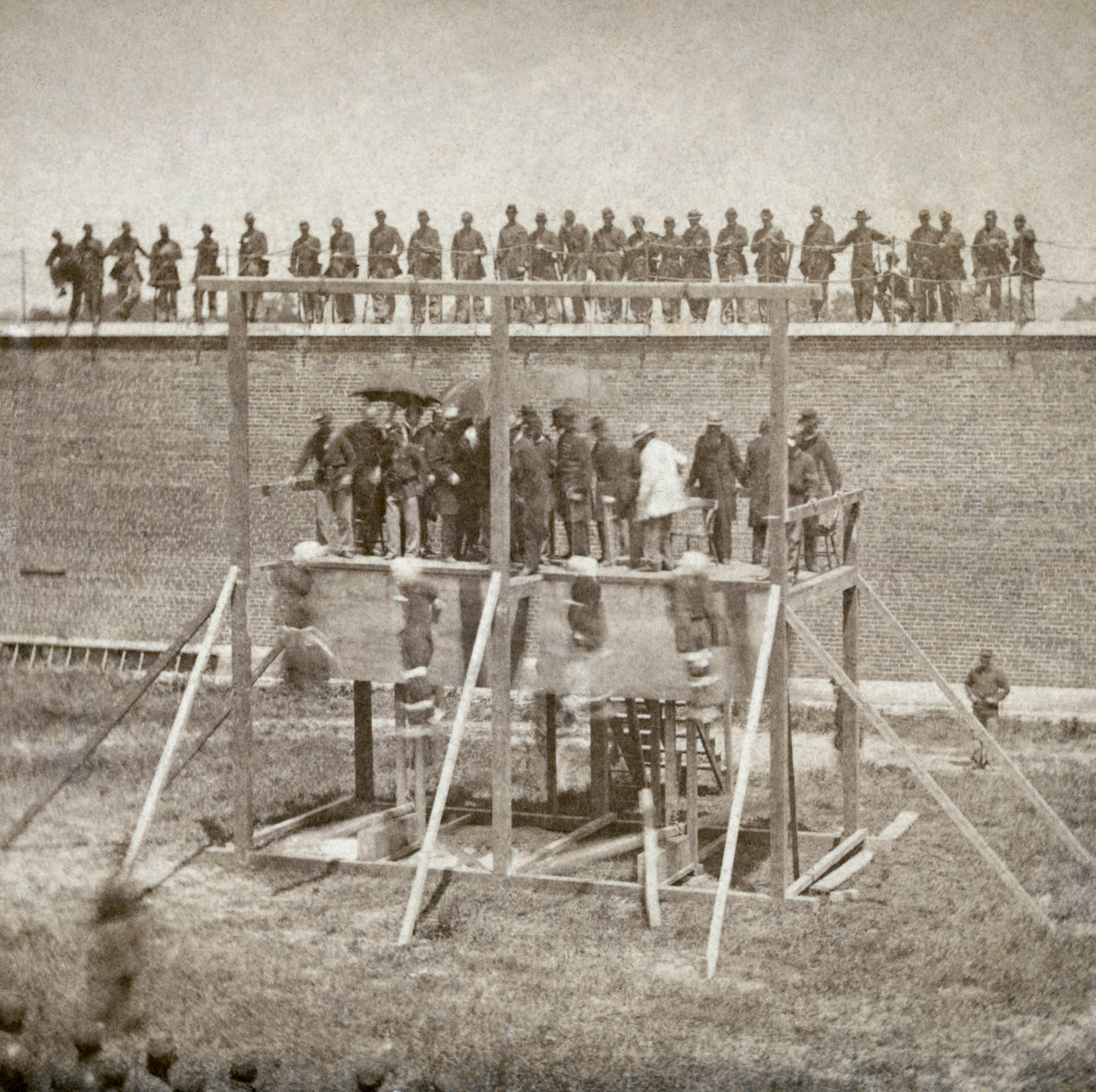 |
| (Alexander Gardner) Execution |
 |
| (Alexander Gardner) Middle bridge over Anitetam Creek in Spetember 1862 |
Subscribe to:
Posts (Atom)